Buying an Extended Bungalow in Canvey Island? Check for Building Regulations and Planning Approval Before You Make an Offer
If you are considering purchasing a house or bungalow in Canvey Island that has been extended, there is one issue that deserves particular attention before you commit: does the extension have Building Regulations approval and a completion certificate?
On Canvey Island, this question is more than routine paperwork. Due to the island’s unique ground conditions, the design and construction of foundations are critical. Where extensions have been built without approval, the risks to a buyer can be significantly higher than in other parts of Essex.
As a building surveying practice working across South Essex, we regularly inspect properties in Canvey, and the same issues arise time and again. This article explains why Building Regulations approval matters so much locally, what can go wrong when it is absent, and what buyers should ask for before making an offer.
Why Canvey Island Is Different
Canvey Island’s geology sets it apart from areas such as Rayleigh or Benfleet.
The island is largely formed of:
* A relatively thin crust of clay and made ground
* Soft alluvial and marsh deposits beneath
* A high groundwater table
* Land within designated flood zones
These subsoil conditions mean that foundations must be carefully designed to distribute structural loads effectively and minimise the risk of settlement.
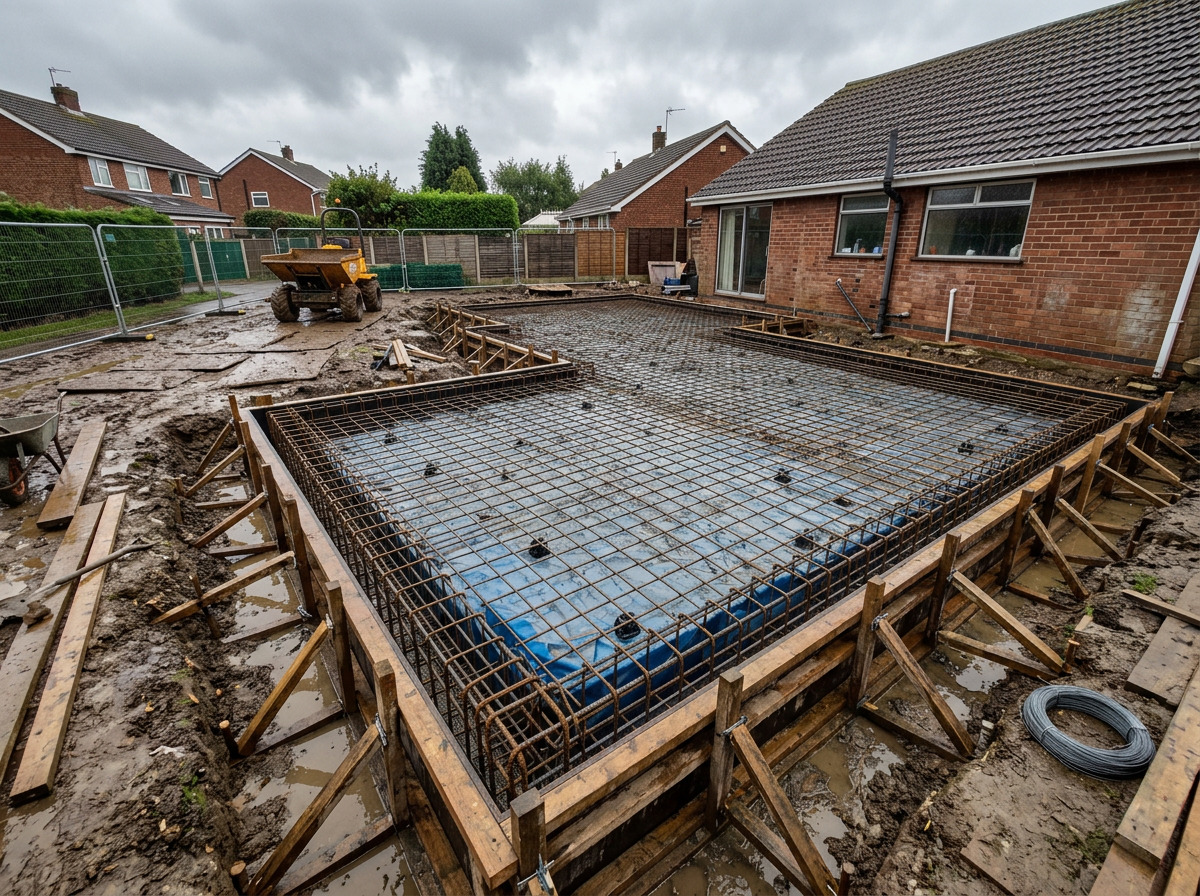
In my experience, foundations in Canvey are **rarely traditional deep strip footings or piled systems for standard domestic construction**. Instead, properties — particularly bungalows — are typically constructed on **reinforced concrete raft foundations**, often incorporating thickened edge beams to support the external walls.
A raft foundation spreads the load of the building across a larger footprint, helping to reduce bearing pressure on the softer ground beneath. When properly designed and constructed, this is an appropriate and effective solution for the island’s conditions.
However, problems arise when extensions are added later — particularly where the structural design has not been properly considered or inspected under Building Regulations.
—
The Hidden Risk With Unapproved Extensions
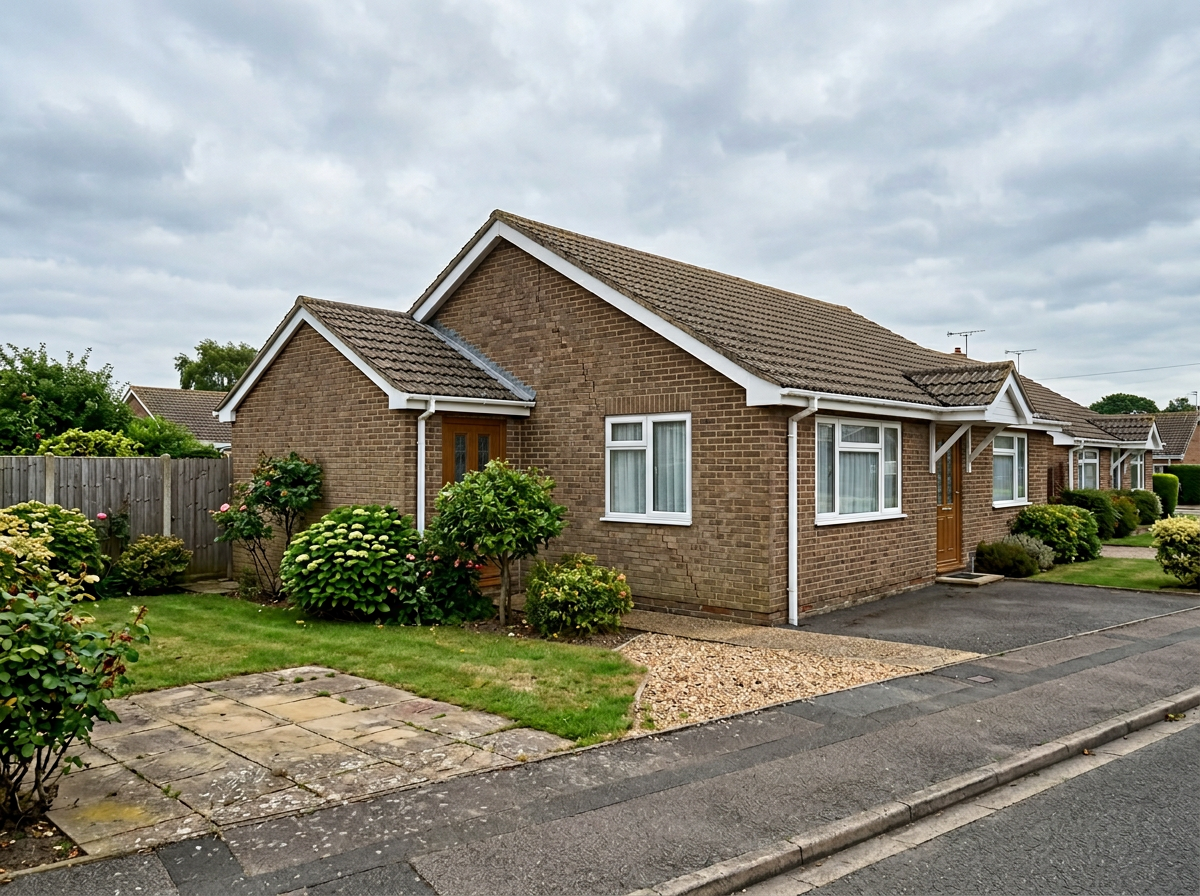
Many bungalows on Canvey have been extended over the years. Rear extensions, side infills and enlarged kitchen/dining spaces are common.
If an extension has been constructed without Building Regulations approval, several important questions arise:
* Was the foundation designed by a structural engineer?
* Is it a reinforced concrete raft to match the original structure?
* How was it connected to the existing foundation?
* Was it inspected prior to concrete being poured?
* Has a completion certificate ever been issued?
Without documentation, a buyer is effectively relying on assumption rather than evidence.
It is not uncommon to hear, “It’s been there 15 years and it’s fine.” However, settlement in soft alluvial soils can be gradual. Differential movement may develop slowly and only become visible when cracking worsens over time.
—
Why Foundation Design Is Critical in Canvey
On raft-founded buildings, the performance of the structure depends on even load distribution and consistent ground behaviour beneath the slab.
When an extension is added, the foundation solution must be carefully considered. In Canvey, this will typically involve:
* A reinforced concrete raft slab
* Thickened perimeter beams beneath load-bearing walls
* Steel reinforcement designed to suit loading conditions
* Careful integration with the existing structure
The most critical element is how the new foundation connects to the original raft.
A structural engineer should assess:
* Whether the new raft is structurally tied into the original
* Whether movement joints are required
* The relative stiffness of each slab
* The potential for differential settlement between old and new structures
If an extension foundation is inadequately tied to the original raft, or if its stiffness differs significantly, the two elements may settle at different rates. This differential settlement can lead to:
* Step cracking at junctions
* Separation between structures
* Distortion of openings
* Ongoing structural movement
These risks are heightened in marsh-influenced subsoils where long-term consolidation can occur.
This is precisely why Building Regulations inspections matter. Foundations should be inspected before concrete is poured. Reinforcement should be checked. Structural drawings should be available.
Without approval, there is no independent confirmation that these safeguards were followed.
—
Planning Permission: Why It Matters Too
While Building Regulations address structural compliance, planning approval plays a separate but equally important role.
In a flood-sensitive area such as Canvey Island, planning permission often involves consideration of:
* Flood Risk Assessments
* Finished floor levels
* Surface water drainage strategy
* Flood resilience measures
Obtaining planning approval indicates that the local authority has reviewed the proposal in the context of flood policy and local development constraints.
If an extension lacks planning permission where it was required, a buyer may face:
* Enforcement risk
* Retrospective application costs
* Difficulties when reselling
* Lender concerns
Requesting sight of the approved drawings and decision notice before making an offer can provide clarity and avoid unnecessary expenditure later.
—
Indemnity Insurance Is Not a Structural Guarantee
When missing Building Regulations are discovered during conveyancing, sellers often propose an indemnity insurance policy.
It is important to understand what this does — and does not — cover.
An indemnity policy typically protects against the local authority taking enforcement action for lack of approval. It does **not** confirm that:
* The foundation was structurally adequate
* Reinforcement was installed correctly
* The extension complies with structural standards
* There is no risk of settlement
Insurance cannot prevent cracking or structural movement. It cannot rectify inadequate design.
For buyers in Canvey Island, particularly where raft foundations and soft ground are involved, structural performance is far more important than enforcement protection.
—
What Buyers Should Ask for Before Making an Offer
To avoid unnecessary risk or wasted survey fees, prospective purchasers should request the following from the selling agent **before committing to an offer**:
1. Building Regulations approval notice
2. Completion certificate
3. Structural engineer’s drawings (if applicable)
4. Planning permission decision notice
5. Approved planning drawings
If these documents are not available, it does not automatically mean the extension is defective — but it does mean further investigation is advisable.
In some cases, a structural appraisal may be appropriate before exchange of contracts.
Taking this proactive approach can:
* Avoid unexpected negotiation issues
* Prevent delays during conveyancing
* Reduce the risk of inheriting costly structural problems
* Strengthen your position as a buyer
—
Common Signs of Potential Movement in Extended Bungalows
While documentation is key, physical indicators can also provide clues during viewing:
* Cracking at the junction between original building and extension
* Diagonal cracks from window or door openings
* Internal plaster separation at ceiling lines
* Sloping floors at extension interfaces
* Gaps between skirting boards and flooring
These do not automatically indicate serious structural failure — but in the context of Canvey’s ground conditions, they warrant careful professional assessment.
—
A Local, Practical Approach
Buying property on Canvey Island requires an understanding of local conditions. The island’s raft-based construction and marsh-influenced subsoils mean that foundation design is not simply a box-ticking exercise — it is fundamental to long-term performance.
Where extensions have been properly designed, inspected and certified, they can perform perfectly well. Where they have not, risks increase significantly.
For buyers, the key message is simple:
**Do not rely solely on appearance. Rely on evidence.**
Request documentation early. Review approvals before offering. And where uncertainty remains, seek independent professional advice before committing financially.
—
Final Thoughts
In many parts of Essex, missing Building Regulations for an old extension may be inconvenient but manageable.
In Canvey Island, because of the specific ground conditions and the widespread use of reinforced concrete raft foundations, the implications can be more significant.
If you are considering purchasing an extended bungalow or house locally, ensuring that foundations were correctly designed — and correctly integrated with the original structure — could save substantial expense and stress in the future.
Taking the time to verify approvals before making an offer may ultimately protect both your investment and your peace of mind.
—
Our contact details : MB Design and Surveyors Ltd : 01268 856154 : website : www.mbrebner.com